
Research Signal – Source date 2022-01-01
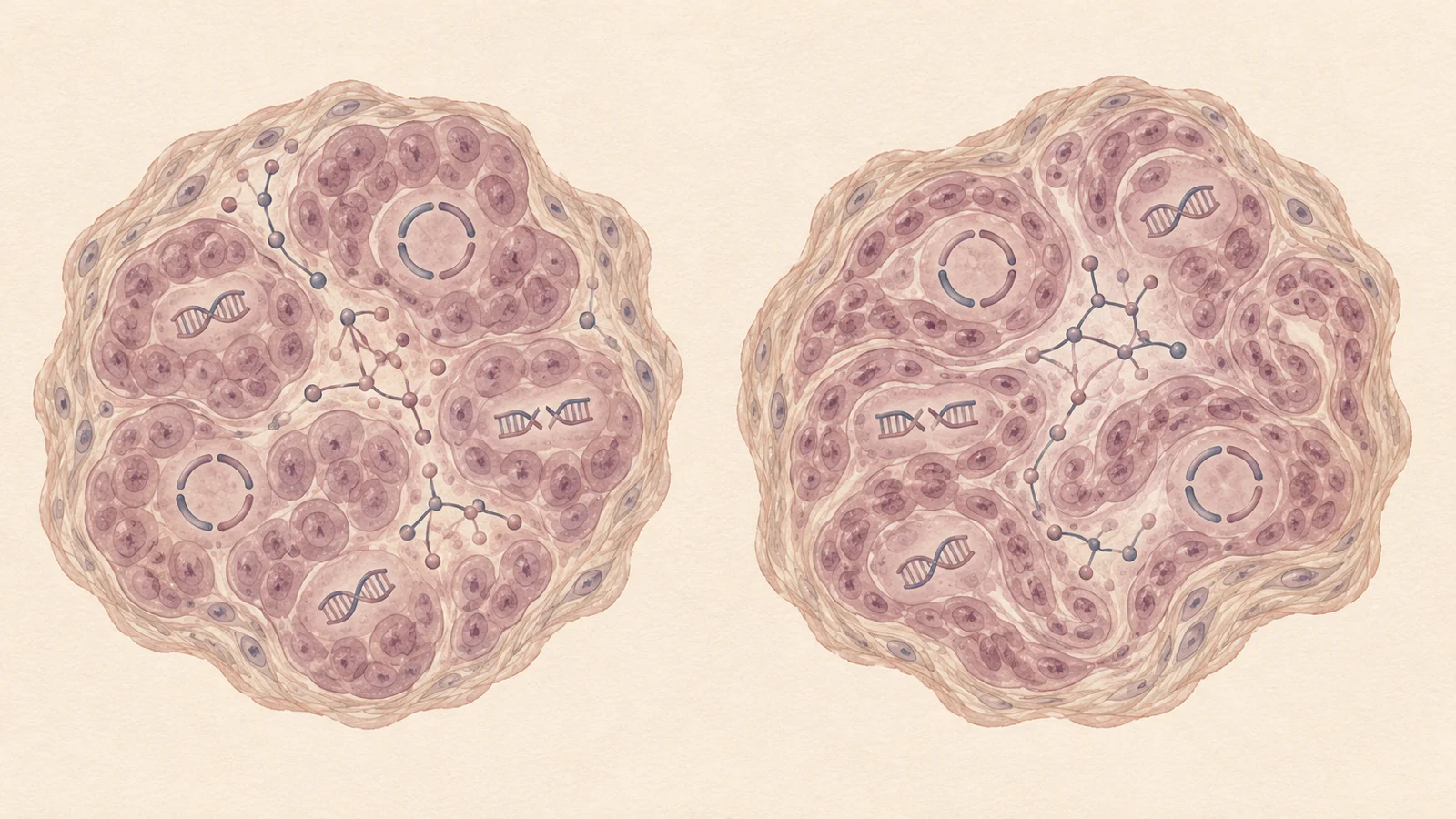
Two people can have breast cancers that look similar in clinical and pathological assessments yet respond differently to treatment. A review published in 2022 points to one reason: breast cancer is molecularly varied, and differences inside tumor cells can shape how resistance emerges. The broad categories it highlights—cell-cycle control, signaling and DNA repair—help explain why a familiar diagnosis may not tell the whole story.
Three cellular processes can affect treatment response
The cell cycle is the sequence through which a cell grows and divides. When its control is altered, the usual regulation of cell division can change. The review identifies this disruption as one feature involved in breast cancer resistance, though its abstract does not specify particular cell-cycle changes or how much each contributes.
Signaling is the system cells use to pass instructions and respond to conditions. The review points to signaling pathways that are active when they should not be as another altered feature. Such activity can matter because treatment response depends partly on the state of the processes a therapy is intended to affect. The supplied summary does not identify particular pathways or establish a specific route from signaling activity to resistance.
DNA repair is how cells address damage to their genetic material. The review also links changes in DNA-repair mechanisms with resistance. Alongside cell-cycle control and signaling, this points to several kinds of cellular biology that may differ among tumors. The abstract does not report a single mechanism that explains every case.
Treatment gains have not ended resistance
The review describes targeted therapies and immunotherapy as important additions to breast cancer treatment that have improved patient survival. That progress exists alongside the problem of resistance: a treatment can help many patients while responses still vary, and resistance can emerge.
These are two different levels of the story. Improved survival is a broad clinical gain associated with newer treatment options. It does not mean that every tumor responds in the same way, or that the biological reasons for an individual response are already clear. The review presents resistance as a continuing challenge even as treatment choices have expanded.
Molecular profiling could refine choices
Molecular profiling examines features of a tumor to help characterize its biology. The review proposes that profiling, together with new biomarkers, could help refine personalized treatment decisions and inform strategies when resistance occurs. In principle, information about a tumor’s biology could help clinicians distinguish cancers that appear similar in routine clinical and pathological terms.
A proposed aid to decision-making is not yet a dependable prediction rule. The evidence summarized here does not establish that a particular biomarker can reliably forecast an individual patient’s response, or that profiling-guided choices improve outcomes. A nearer milestone would be a biomarker prospectively shown to predict response or resistance and to improve treatment decisions in clinical testing.
How this could shape the future
More dependable treatment matching could help people with apparently similar breast cancers receive choices better suited to the biology of their tumors. If resistance develops, that same biological understanding could support a better-grounded choice among alternatives. The review’s account of molecular differences and varied responses offers a reason to pursue this possibility; validated biomarkers, effective alternative treatments and clinical testing would still be needed to make it reliable in care. Targeted therapies and immunotherapy already feature in the review’s account of progress—the future change would be more dependable matching and adjustment as tumor biology becomes clearer.
Key Sources
- Primary source: Pharmacological Basis of Breast Cancer Resistance to Therapies – An Overview.
DOI or Journal Page · Review or Meta-Analysis · 2022-01-01
Keep exploring