
Research Signal – Source date 2022-01-01
A mutation found in cancer cells can look like an unusually precise vaccine target. Yet identifying a marker is only one part of the challenge: a therapeutic vaccine must also prompt immune cells to recognize it, act against it, and ideally retain the ability to respond later. A 2022 review of cancer-vaccine research describes why those steps are connected—and why they remain difficult.
A target must be both distinctive and recognizable
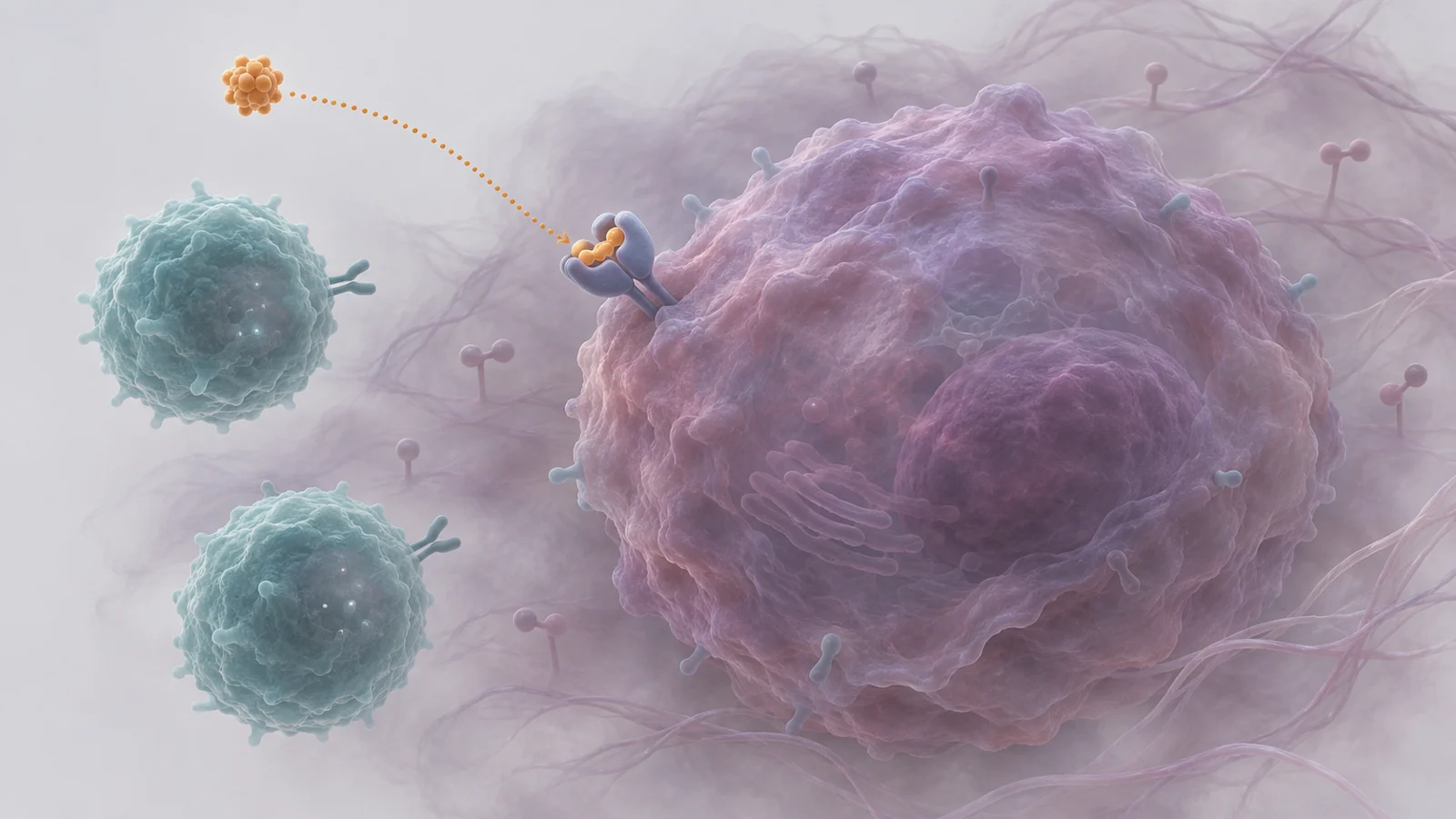
The review describes two important qualities for tumor antigens, the targets a vaccine asks the immune system to recognize. A useful target should be specific to cancer cells, reducing the chance that the response is aimed broadly at healthy tissue, and sufficiently immunogenic, meaning able to provoke an immune response.
Neoantigens are markers that arise from mutated proteins in cancer cells. Because they are cancer-specific and may be highly immunogenic, they are attractive candidates. But most differ from one patient’s cancer to another. That makes a tailored approach relevant: a target identified in one person may not provide a shared recipe for another person’s vaccine.
Personalization addresses the question of which mutation to target. It does not, by itself, ensure that a vaccine will generate a useful response. The review treats target selection and vaccine technology as linked areas of research, while also emphasizing the need to address the ways tumors interfere with immunity.
The desired response has to act and persist
The therapeutic aim described in the review is to elicit T cells that specifically recognize tumor antigens. Effector T cells are meant to carry out an immune response against cells bearing the target. Memory T cells are meant to preserve recognition, supporting a response that can last beyond the initial activation.
Both are goals for vaccine design, not outcomes established by a new trial in the evidence summarized here. A precise target can help direct attention, but the immune response still has to be strong enough to act and capable of retaining that target-specific recognition.
Tumors can obstruct immunity
The review also discusses immune tolerance, suppression, and tumor escape. Tolerance is the immune system’s reluctance to react to a target; suppression describes conditions that dampen immune activity; escape refers to ways a tumor can avoid or withstand immune attack. These obstacles can frustrate a response even when researchers have identified a plausible antigen.
Among the approaches discussed are strategies to improve vaccine immunogenicity, break tolerance, and counter tumor escape. The review also describes checkpoint blockade and co-stimulatory activation, ways of modulating signals that affect T-cell function. These approaches reflect the broader effort to support T-cell survival, proliferation, and effector activity alongside vaccine design.
The paper is a review of targets and therapeutic approaches, including related patents. The supplied abstract gives no patient-outcome estimate or comparative trial result, so it cannot establish that a particular platform worked better or that a vaccine improved survival or cured patients. Its contribution here is to describe connected research challenges and proposed directions, rather than report a new treatment result.
What this could change
A more dependable therapeutic vaccine tailored to a mutation in a person’s tumor could eventually give clinicians another way to direct immunity at cancer cells. The path to that possibility runs from identifying a cancer-specific, potentially immunogenic neoantigen to designing a vaccine that elicits tumor-specific effector and memory T cells, while also addressing how tumors dampen immune activity or evade the response. Personalization is already part of the approach the review considers; the further step would be showing reliably that a matched vaccine can direct and sustain useful immunity in patients. That would require advances in vaccine design, immune modulation, and clinical testing, and would not itself promise a cure.
A nearer milestone would be a prospective study of a matched vaccine strategy that reports both tumor-antigen-specific effector and memory responses and patient outcomes. Such evidence could help show whether the intended immune activity accompanies meaningful clinical results.
Key Sources
- Primary source: Altering Landscape of Cancer Vaccines: Unique Platforms, Research on Therapeutic Applications and Recent Patents.
DOI or Journal Page · Review or Meta-Analysis · 2022-01-01
Keep exploring