
Research Signal – Source date 2025-12-03
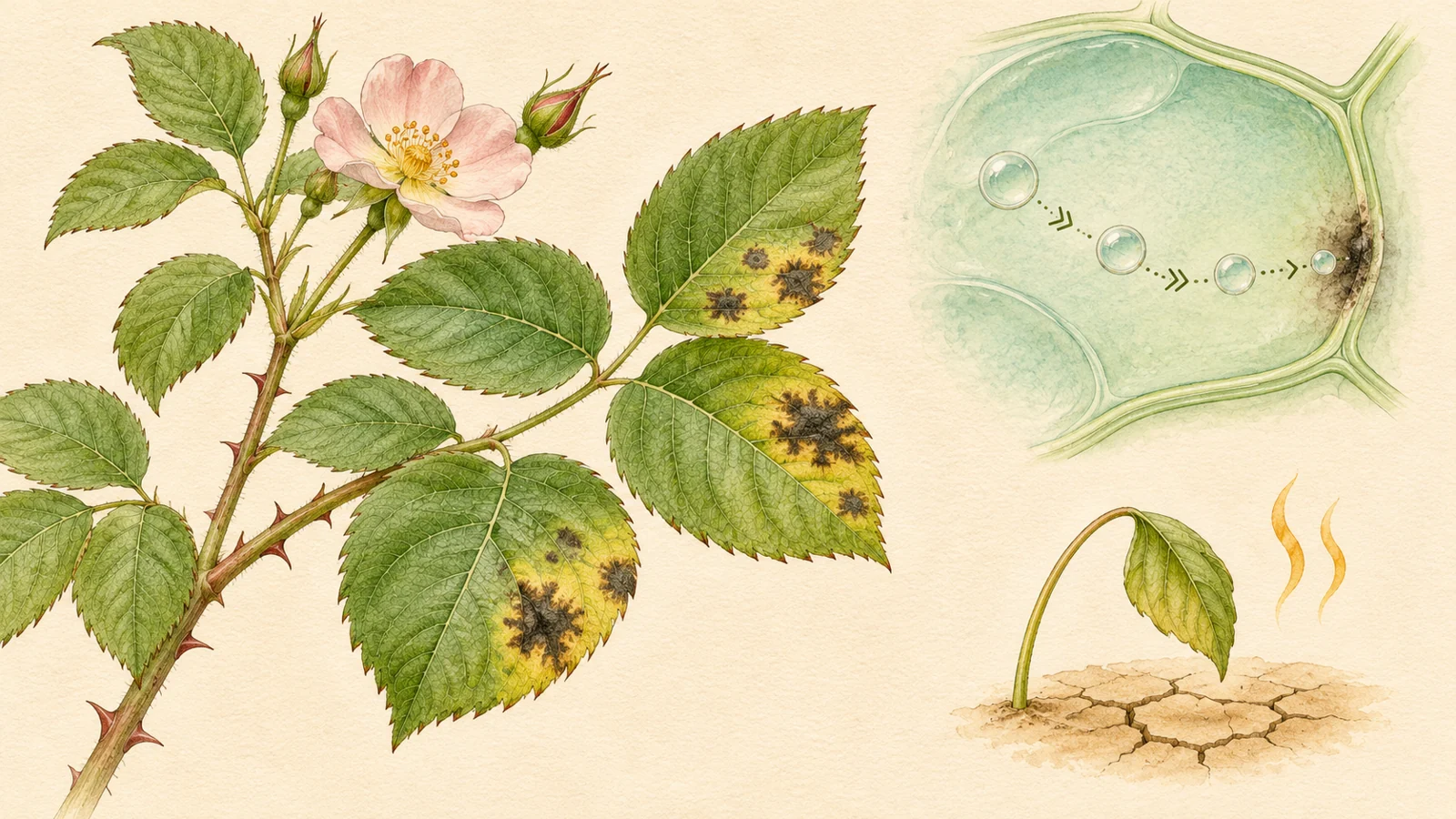
A rose can show a strong immune response and still be vulnerable to black spot. In a cultivar comparison summarized in a review published December 3, 2025, the susceptible rose activated many defense-related genes, while the resistant one showed an earlier response associated with delivering defenses to infection sites. The difference suggests that resilience depends on how and when defenses are organized, not simply how many genes switch on.
The review, Engineering resilient roses: molecular insights into biotic and abiotic stress adaptation, brings together studies of rose responses to pathogens, insects, drought, salinity, and temperature extremes. Its central challenge for breeders is familiar in principle but difficult in practice: roses must contend with different kinds of stress while keeping the flowers and foliage people value.
A strong immune response did not mean resistance
Black spot is among the diseases that can damage rose growth and appearance. In the comparison described by the review, researchers examined the susceptible cultivar ‘Antique Romantica’ and the resistant ‘Princess Michael of Kent’. The susceptible plants showed strong activation of pathogenesis-related genes and regulatory proteins, alongside changes in cell-wall remodeling and water-stress signaling. The resistant cultivar, by contrast, showed an earlier defense pattern involving Golgi vesicle traffic and peptide secretion—cellular processes associated with moving defense compounds toward infection sites.
That contrast helps explain the apparent paradox. An immune response measured in bulk gene activity can look vigorous while the plant remains susceptible. The resistant cultivar’s earlier, differently organized response may have helped defenses reach the relevant tissue more efficiently. The comparison is evidence about those cultivars and the infections studied; it is not a rule that every resistant rose uses the same strategy.
Roses face living attackers that challenge defenses in different ways. Fungi cause black spot, gray mold, and powdery mildew; aphids feed on the plant and can trigger cellular signals that help produce defensive chemicals. Roses also have barriers such as waxy coatings, thorns, and fine surface hairs, along with defenses switched on after attack through plant hormones and protective compounds.
Heat, drought, cold, and salty soil impose another kind of pressure. They disrupt water balance, photosynthesis, nutrient uptake, and the cell’s internal conditions. A plant that manages one pathogen well may still struggle to retain water or maintain normal growth during heat. Breeding for resilience therefore means bringing together traits that answer distinct problems.
From salt balance to water held in petals
One rose salt-response example concerns NHX proteins, which move sodium and hydrogen ions across membranes inside cells. In hybrid rose, RhNHX1 expression rises under salt stress; the protein also compensated for a missing salt-handling transporter in yeast. In Rosa rugosa, RrNHX1 and part of a proton-pumping system have been linked to improved salt tolerance. These findings point to a practical cellular task: maintaining ion balance under saline conditions.
A separate example concerns water loss. RhbHLH92, a regulatory protein studied in hybrid rose, is expressed in petals under dehydration stress. In rose experiments, increasing its activity improved water retention and antioxidant capacity, while silencing it was associated with oxidative damage and loss of tissue firmness. Because petals are the plant’s display, a regulator affecting their performance may matter to both stress response and ornamental quality.
Not every functional result in the review comes from a rose. For example, increasing the activity of the rose gene RmNHX2 in tobacco improved ion balance and antioxidant measures under salt stress. That test helps researchers assess what the candidate gene can do in a living plant, but it does not show that a rose cultivar will respond the same way in a garden or greenhouse. The species and the measured outcome matter when interpreting each result.
Stress responses move on different timescales
Some defenses begin with rapid changes to existing proteins. In Rosa chinensis, heat stress activates phosphorylation signaling within about half an hour to two hours. Phosphorylation is a chemical modification that can alter a protein’s activity; in this case, signaling cascades are linked to changes in genes involved in photosynthesis. The review links this early signaling to changes in photosynthesis-related gene activity during heat exposure.
Other responses involve epigenetic regulation: chemical marks and chromatin changes that influence whether genes are active. The review discusses DNA methylation as one way plants can retain a molecular record of stress, sometimes described as “stress memory.” The rose examples show why this idea needs care. Under cold conditions, methylation changes near the rose gene RhAG are linked to lower gene activity and a shift in floral development, including more petals. This is a change in gene regulation and flower traits; the examples summarized do not establish inherited stress memory across generations of roses.
Markers can guide breeding, while other tools test targets
For black spot, the cloned Rdr1 resistance locus offers a more direct route into breeding. DNA markers linked to Rdr1 can help identify plants carrying the resistance-associated region, allowing breeders to select among seedlings before disease performance is fully apparent. Related resistance loci have also been mapped, though some still need more precise marker development.
Markers help breeders track inherited variation already present in their breeding material. Other tools answer different questions. Virus-induced gene silencing can temporarily reduce a candidate gene’s activity, helping researchers test whether it contributes to a trait. Genome editing could eventually alter selected genes directly, but identifying a promising target is only an early step toward a finished rose variety. The review describes these methods as routes for research and breeding development, not proof that a commercially available edited rose can withstand combined stresses.
The evidence also shows why a candidate trait has to be checked against the whole plant. In one example summarized by the review, expressing a stress-response regulator in Rosa chinensis improved salt tolerance but also changed leaf shape and reduced chlorophyll and starch. Such trade-offs matter: a plant may perform better on one measure while losing qualities important for growth or appearance. Other candidate genes have been tested in tobacco or Arabidopsis, which can clarify gene function but do not establish performance in cultivated roses.
A persuasive next step is to compare candidate rose cultivars with existing ones under the same growing conditions, measuring black spot severity, heat or drought response, and flower quality together. That kind of test would show whether separate mechanisms and resistance markers can contribute to a rose that performs well across more than one pressure.
How this could shape the future
A grower or gardener could one day choose roses that keep attractive flowers through recurring hot, dry conditions while also holding up under black spot pressure—especially in places where current choices struggle. The review describes a starting point: disease-resistance markers such as those linked to Rdr1, alongside rose genes and pathways involved in water balance, salt response, and temperature stress. Further breeding and validation would have to bring those pieces together and show that flower quality holds up as well.
A nearer milestone is replicated comparison of candidate cultivars with existing roses, scoring disease, heat or drought response, and blooms in the same trials. If those comparisons identify dependable combinations, breeders could use markers and functional gene tests to guide selection toward roses that retain both resilience and ornamental value. The combined performance remains a goal to demonstrate, not an established property of the roses described in this review.
Key Sources
- Primary source: Engineering resilient roses: molecular insights into biotic and abiotic stress adaptation.
DOI or Journal Page · Peer-Reviewed Paper · 2025-12-03
Keep exploring