
Fisetin for Vascular Function and Mobility
Can fisetin improve vascular function in older adults and reduce mobility impairment in people with PAD?
Following these trials could clarify whether fisetin offers measurable benefits for blood vessel function and mobility, and whether reduced cellular senescence accompanies those benefits.
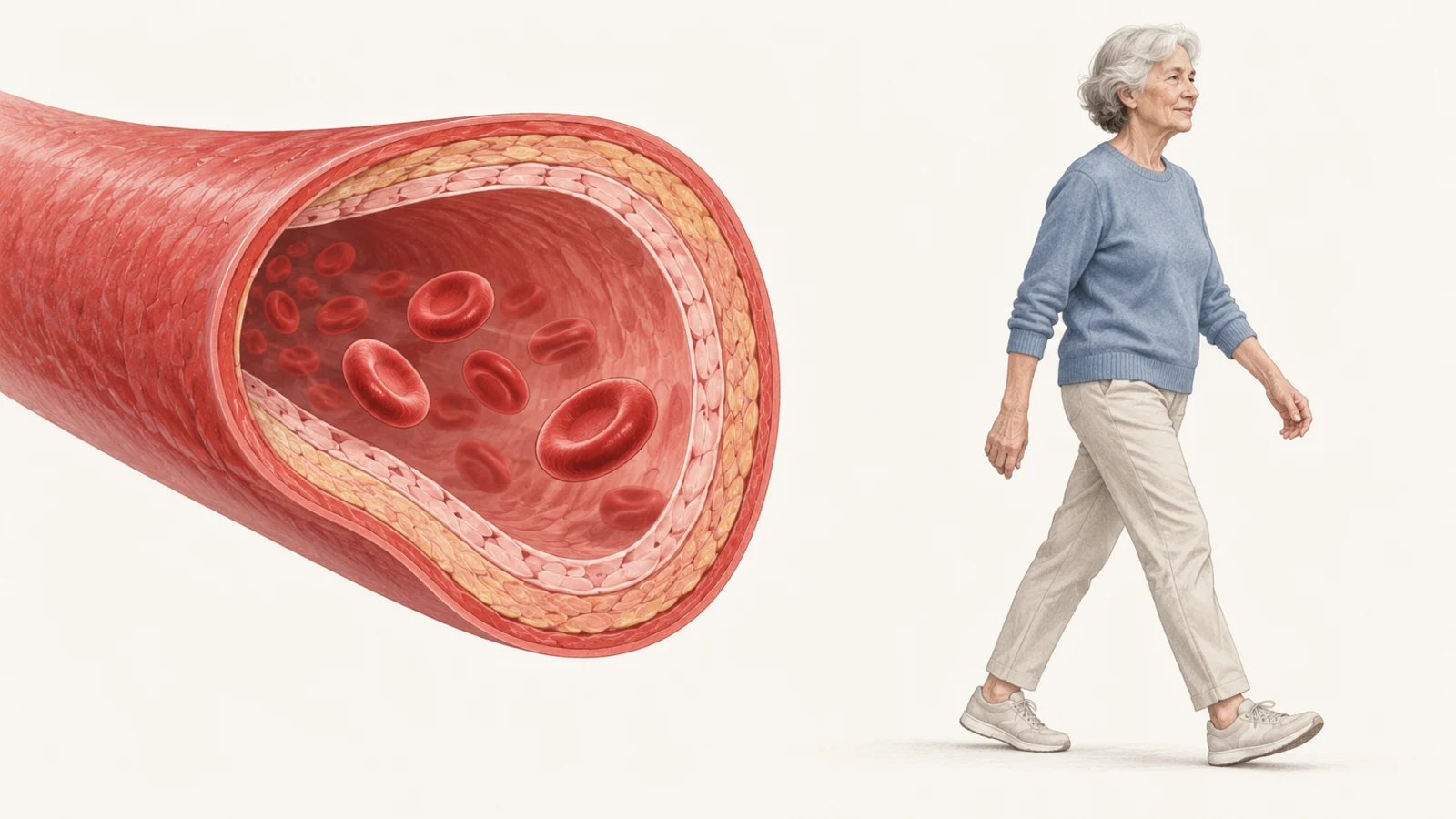
Where it stands now
Main bottleneck
The available trial records provide no outcomes establishing whether fisetin improves vascular function or mobility, or whether changes in senescence translate into functional benefits.
Watch next
Reported human trial results measuring vascular function in older adults or senescence and mobility impairment in people with PAD.
Progress timeline
How the evidence has changed over time.
2024 · 1 update
- What a fisetin study could reveal about walking with peripheral artery diseaseResearch note 2 of 2 · Source date 2024-05-06
Since the previous research note · Earlier expectation not tested
Track continuity
Since the previous research note: What a fisetin trial is designed to learn about older blood vessels
Previous expectation: Fisetin might eventually help older adults preserve vascular function if human benefits proved reproducible, tolerable, and practical to sustain.
What this study adds: The supplied registry description introduces a proposed study in people with peripheral artery disease that pairs senescent-cell measurements with walking distance. It provides no outcome evidence testing the earlier vascular-function forecast.
Current research note
2023 · 1 update
- What a fisetin trial is designed to learn about older blood vesselsResearch note 1 of 2 · Source date 2023-11-15
How this Track works
This page changes as new evidence arrives. Open any update to see what researchers found at that point in the story.