
Transcranial Electrical Stimulation for Sleep and Cognition
Can transcranial electrical stimulation improve both sleep and cognition in older adults, and does personalizing stimulation change the benefit?
Following these studies could clarify whether stimulation produces measurable benefits across sleep and cognition, and how findings differ between healthy older adults and those reporting cognitive and sleep complaints.
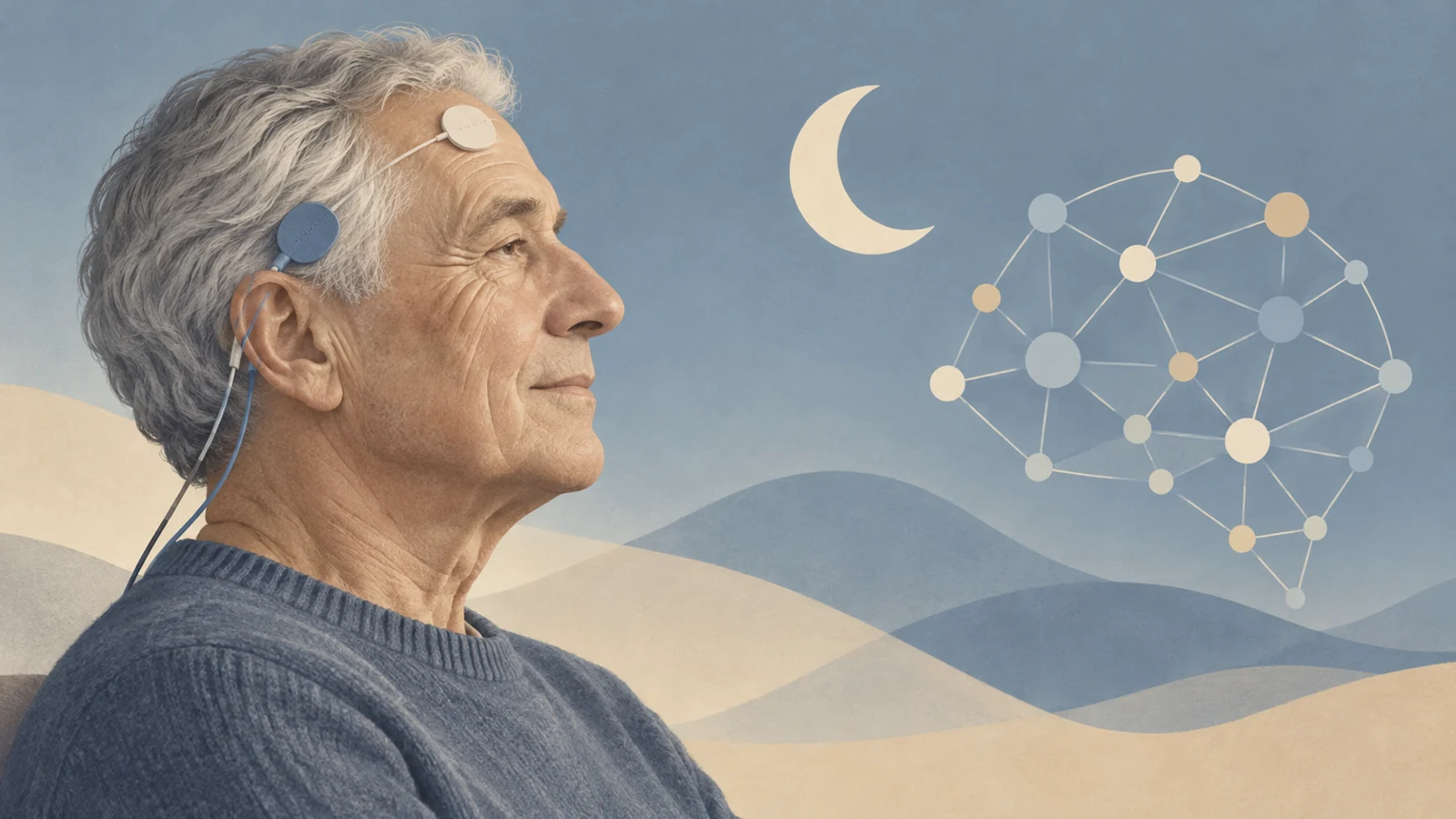
Where it stands now
Main bottleneck
Current evidence identifies trial questions but provides no outcome data establishing benefits or showing whether personalized slow-oscillatory stimulation improves responses.
Watch next
Reported trial results measuring sleep and cognitive outcomes, with evidence on how responses vary between participants receiving personalized stimulation.
Progress timeline
How the evidence has changed over time.
2026 · 1 update
- How a planned trial will link brain stimulation with sleep and cognitive complaintsResearch note 2 of 2 · Source date 2026-02-25
Since the previous research note · Earlier expectation not tested
Track continuity
Since the previous research note: How pre-nap brain stimulation is being tested for sleep and thinking in older adults
Previous expectation: A brief pre-nap intervention might eventually support sleep-related memory in older adults if benefits were reproducible, safety acceptable and delivery practical beyond the laboratory.
What this study adds: NCT07433738 describes a planned four-week active-versus-sham comparison that adds finger skin-signal measurement and individual-response prediction to sleep and cognitive-complaint assessment. It supplies no outcome evidence testing the earlier pre-nap forecast.
Current research note
2025 · 1 update
- How pre-nap brain stimulation is being tested for sleep and thinking in older adultsResearch note 1 of 2 · Source date 2025-04-22
How this Track works
This page changes as new evidence arrives. Open any update to see what researchers found at that point in the story.