
Senescence in lung aging and infection susceptibility
How does cellular senescence contribute to aging lungs becoming more vulnerable to infection, and what role does metabolic dysfunction play?
Following this research could clarify how senescence and metabolic dysfunction connect lung aging with disease and infection susceptibility, and whether either offers a useful target for intervention.
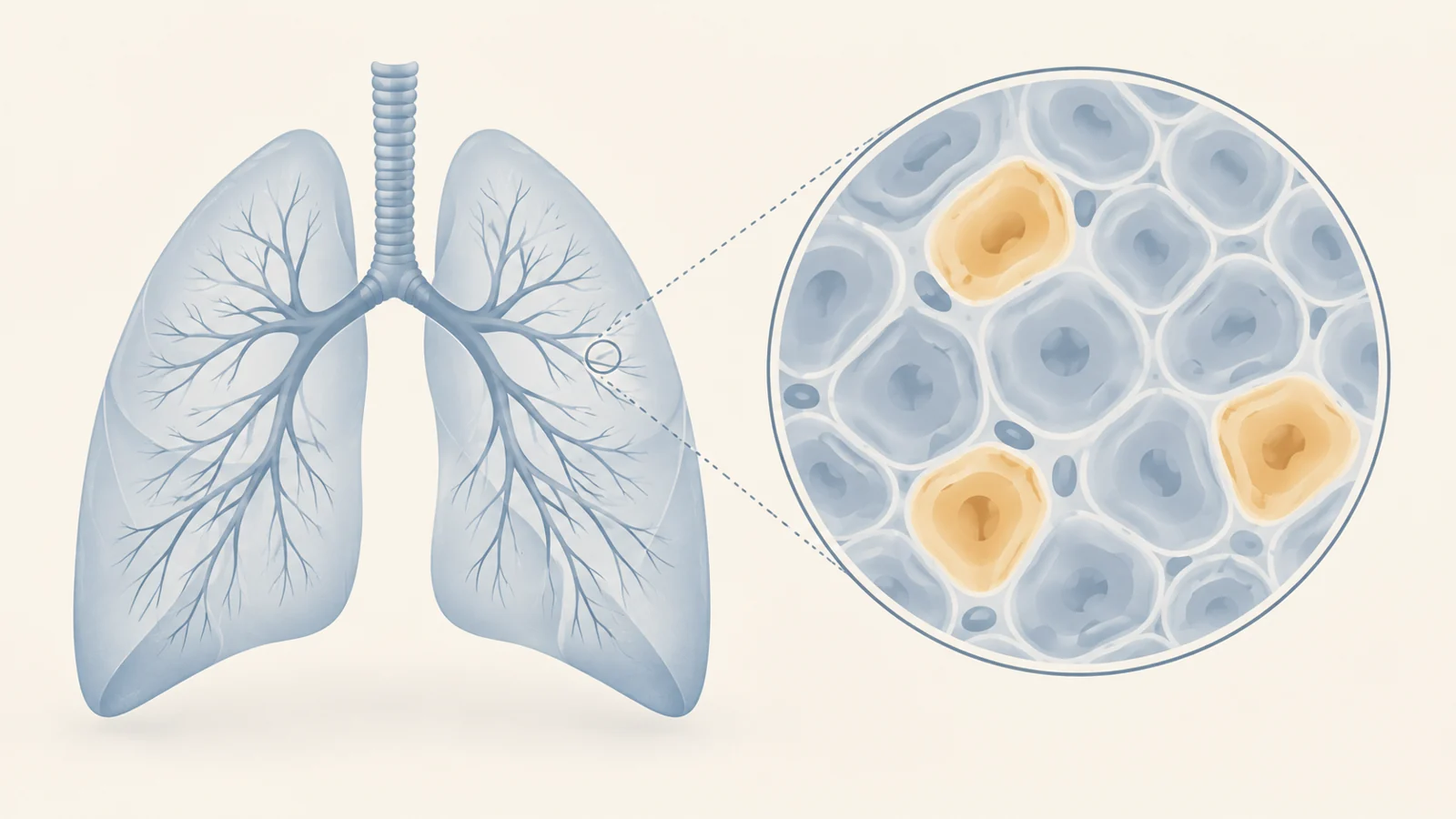
Where it stands now
Main bottleneck
The bounded evidence does not establish whether changing senescence or metabolic dysfunction can preserve lung function and improve resistance to infection.
Watch next
Controlled evidence showing whether targeting senescence or metabolic dysfunction in aging lungs improves both lung function and resistance to infection.
Progress timeline
How the evidence has changed over time.
2026 · 1 update
- How altered cell fuel use can interfere with lung repairResearch note 2 of 2 · Source date 2026-03-06
Since the previous research note · Earlier expectation not tested
Track continuity
Since the previous research note: How aging lung tissue can reshape the fight against infection
Previous expectation: Selectively correcting harmful senescent-cell activity might help older adults recover from respiratory infections and develop stronger vaccine protection while preserving repair.
What this study adds: The March 2026 review organizes mitochondrial and metabolic mechanisms around chronic lung disease and summarizes experiments relevant to epithelial repair and fibrosis. These findings develop a repair-focused therapeutic rationale without testing the earlier infection-recovery or vaccination forecast.
Current research note
2022 · 1 update
- How aging lung tissue can reshape the fight against infectionResearch note 1 of 2 · Source date 2022-08-31
How this Track works
This page changes as new evidence arrives. Open any update to see what researchers found at that point in the story.