
Lightweight composite sandwich design
How can composite face sheets and core designs be combined to make sandwich structures lighter while meeting load-bearing requirements?
It can show which design choices deliver useful weight savings in applications such as aircraft pallet base plates, and how well optimization predictions match physical measurements.
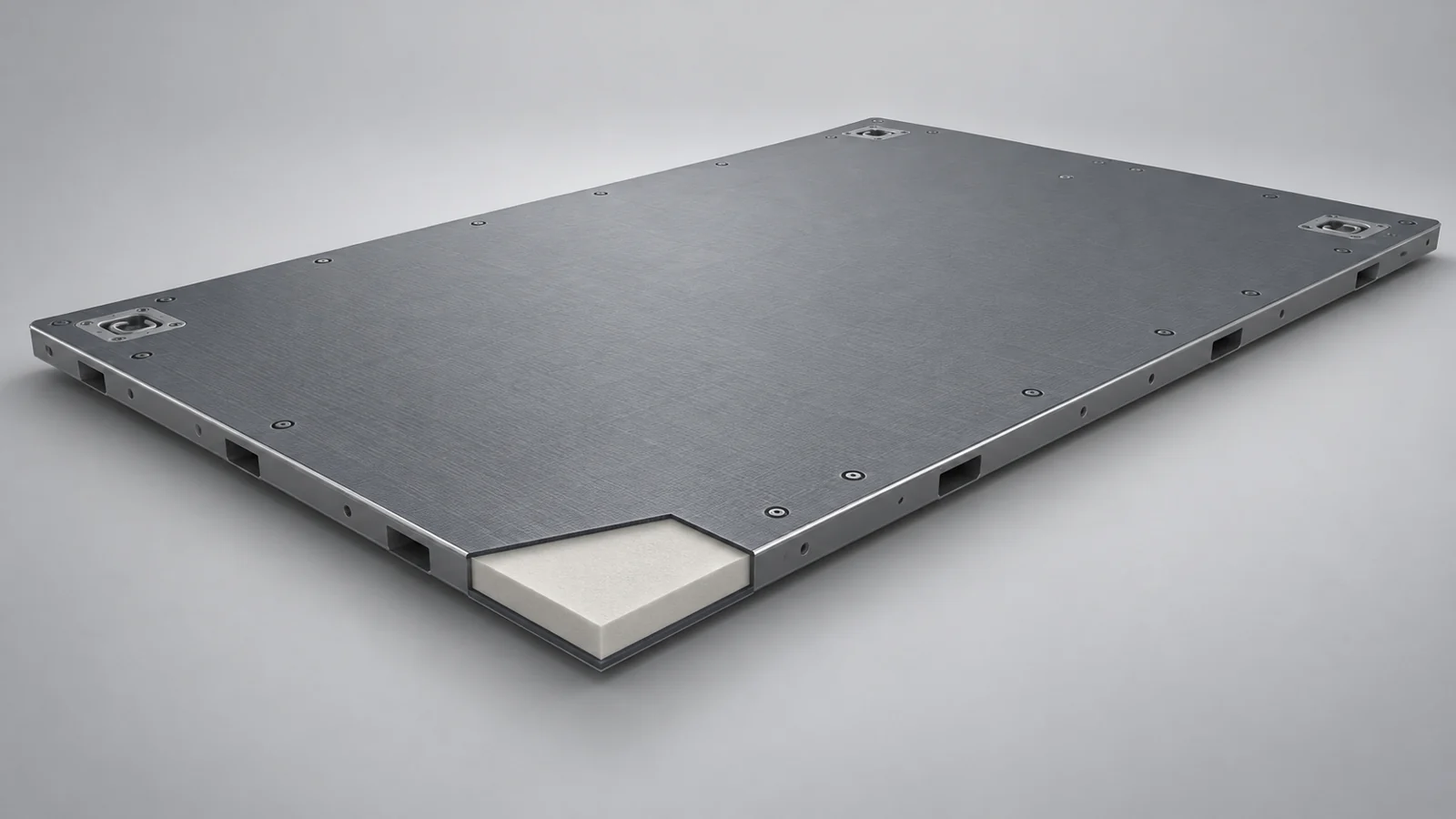
Where it stands now
Main bottleneck
Current evidence includes experimental and finite-element validation, but does not establish how reliably those results extend across different core and face-sheet designs.
Watch next
A comparison of alternative core and composite face-sheet designs that measures weight and load-bearing performance and tests whether optimization models predict the results.
Progress timeline
How the evidence has changed over time.
2022 · 1 update
- How the core, skins and joints make a lightweight panel workResearch note 3 of 3 · Source date 2022-10-11
Since the previous research note · Earlier expectation not tested
Track continuity
Since the previous research note: How carbon-fiber skins and aluminum supports share a panel’s load
Previous expectation: A calculation method accounting for component bending and connection movement could help engineers compare lighter load-bearing panels if it proved applicable at service scale.
What this study adds: The October 2022 review brings a broader set of core geometries, face materials, joining approaches and responsive-material examples into view. It supplies design context without testing that particular method or establishing its scale-up.
Current research note
2021 · 2 updates
- How thin carbon-fiber skins and honeycomb can lighten pallet basesResearch note 1 of 3 · Source date 2021-03-09
- How carbon-fiber skins and aluminum supports share a panel’s loadResearch note 2 of 3 · Source date 2021-12-12
Since the previous research note · Earlier expectation not tested
Track continuity
Since the previous research note: How thin carbon-fiber skins and honeycomb can lighten pallet bases
Previous expectation: A lightweight aircraft-pallet base could reduce the dead weight carried in air cargo if its calculated advantage survives operational requirements.
What this study adds: The December 2021 study reports measurements and model comparisons for a different structure with carbon-fiber skins and riveted aluminum stiffeners. It also calculates distinct minimum-mass and minimum-cost laminate choices.
Current research note
How this Track works
This page changes as new evidence arrives. Open any update to see what researchers found at that point in the story.