
Evidence date · 2025-11-21 · Research note 3 of 3
1 2 3
See current Track status →
Since the previous research note · Earlier expectation not tested
Track continuity
Since the previous research note: Which hormone problems can arise during cancer immunotherapy?
Previous expectation: More coordinated recognition and management of hormone complications might reduce acute harm for people receiving checkpoint inhibitors.
What this study adds: This 2025 patient-level case adds a specific sequence of thyroid replacement, adrenal crisis and improvement after prednisone amid competing explanations for adrenal insufficiency. It did not evaluate a coordinated safety program.
What changed in this study
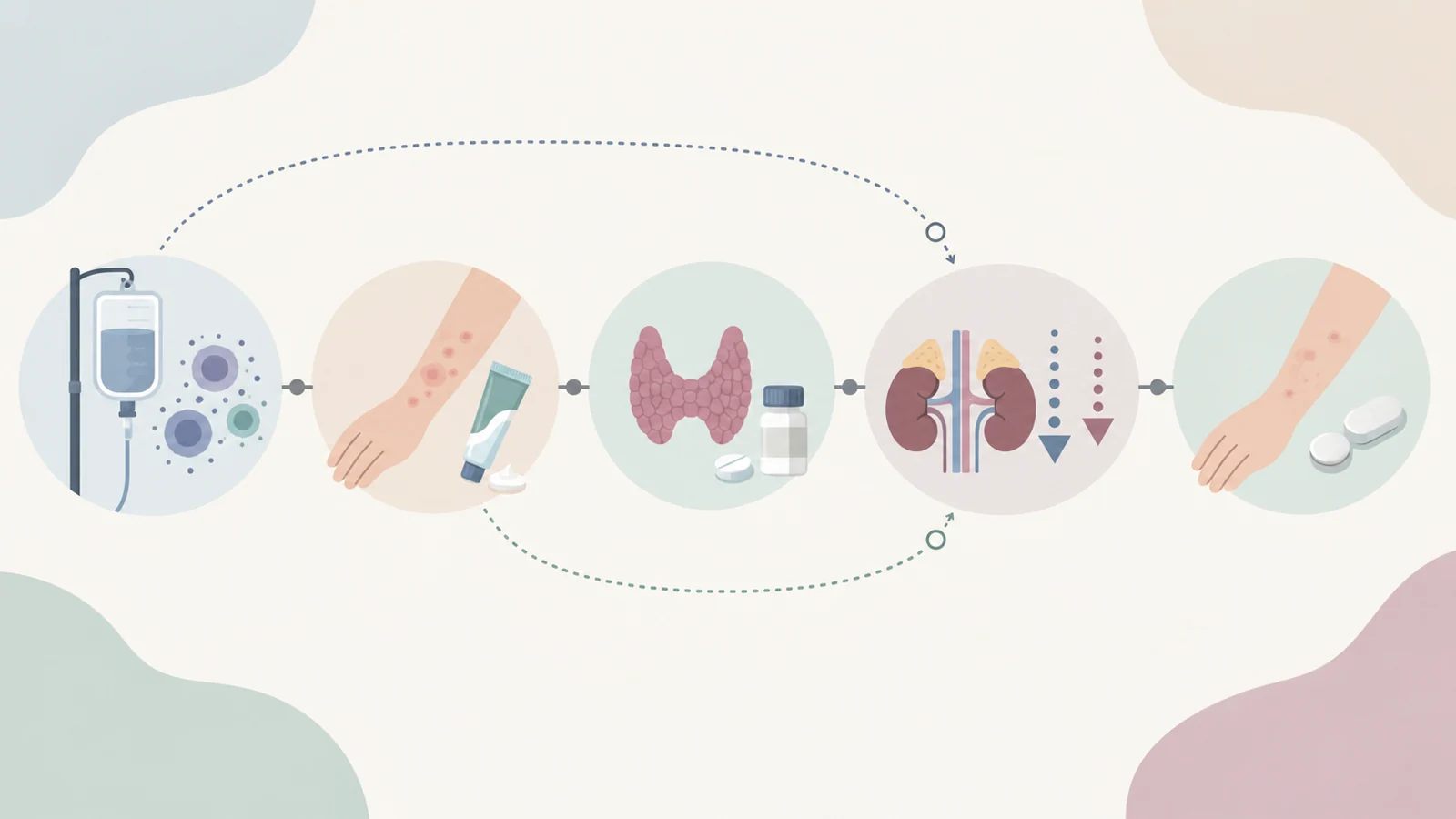
A 71-year-old man became more ill after starting thyroid hormone for severe hypothyroidism. He developed fever, low blood pressure and unusual drowsiness. Later tests found low morning cortisol and ACTH, pointing to a second problem: secondary adrenal insufficiency. The case suggests that thyroid replacement may have raised the strain on a body already short of cortisol, though it cannot establish what caused that shortage.
The sequence began after cancer treatment ended
The patient had esophageal squamous cell cancer. His treatment included chemotherapy, surgery and 10 cycles of sintilimab, a cancer drug that blocks the PD-1 immune checkpoint. His thyroid and kidney tests had been normal before treatment. Months after the cancer therapy ended, an extensive rash appeared on his trunk and limbs. It was diagnosed as pityriasis rosea and treated with antihistamines and potent corticosteroid creams applied over a wide area for six weeks.
After his dermatology care, he developed worsening appetite, fatigue and weight loss. He lost about 4 kg before admission. Tests showed low sodium and blood glucose, as well as impaired kidney function. They also showed severe primary hypothyroidism, meaning the thyroid was producing too little hormone. Thyroid-stimulating hormone (TSH), the signal urging the thyroid to work, was above 100 mIU/L, far above its reference range; the thyroid hormones free T4 and free T3 were well below theirs. Doctors started levothyroxine, a replacement thyroid hormone, at 100 micrograms per day.
His condition continued to deteriorate. He experienced episodes of fever, low blood pressure and unusual drowsiness, alongside low sodium and blood glucose. The thyroid diagnosis was real, but it did not account for the full course. Doctors found that his morning cortisol and ACTH were also low.
Why thyroid replacement may have changed the balance
Sintilimab blocks a signal that normally restrains immune activity. This can help immune cells attack a tumor, but the same immune activity may affect healthy hormone-producing glands. The thyroid, pituitary and adrenal glands can all be involved in immune-related side effects. In this patient, severe thyroid failure and adrenal insufficiency appeared in the same stretch of illness.
The paper’s authors propose that starting levothyroxine may have helped tip an existing cortisol shortage into crisis. Thyroid hormone increases the body’s metabolic activity and can speed cortisol clearance. A person with adequate adrenal function can meet greater cortisol needs; someone already unable to produce enough may not. This offers a possible explanation for the worsening after thyroid replacement began. It does not show that levothyroxine alone caused the crisis.
Low cortisol and ACTH identified a second problem
Cortisol is produced by the adrenal glands, while ACTH is a pituitary signal that prompts them to make it. Low morning levels of both supported the diagnosis of secondary adrenal insufficiency, meaning that inadequate hormonal signaling was part of the problem. Renin and aldosterone, hormones involved in controlling salt and blood pressure, were within their reference ranges. That suggested this part of adrenal function was preserved.
Imaging did not settle the source. The adrenal glands looked normal on CT. The pituitary was normal in size on MRI, although a possible tiny microadenoma was noted. A normal-sized pituitary does not rule out checkpoint-related inflammation or ACTH deficiency. An ACTH stimulation test, which could have added information about adrenal response, was not performed because of clinical constraints.
Two possible routes could explain the cortisol shortage
The authors considered the extensive topical corticosteroid treatment one possibility. Potent creams applied over a large area can be absorbed through the skin; the authors also noted that an impaired skin barrier might increase absorption. They considered the timing consistent with suppression of the body’s pituitary-adrenal signaling system. The case does not show how much, if any, the creams contributed.
A second possibility was delayed ACTH deficiency related to sintilimab. Checkpoint inhibitors can affect pituitary hormone function, and this patient’s treatment history and delayed symptoms were compatible with that explanation. The MRI did not rule it out. Because the relevant stimulation testing was unavailable, the case could not distinguish an immunotherapy-related effect from steroid-related suppression, or determine whether both played a role.
The rash itself also remains uncertain. It appeared after sintilimab had ended and was diagnosed as pityriasis rosea. The authors considered a delayed immune-related skin reaction possible, but the patient’s course does not establish that sintilimab caused it. The rash matters to the hormone story because its treatment introduced another plausible contributor to low ACTH and cortisol.
Improvement followed prednisone
Doctors started prednisone after diagnosing secondary adrenal insufficiency. His mental state and appetite improved within a day. By one week, his blood salts had normalized, kidney measures had improved, changes on his heart tracing had resolved, and he had gained 3.5 kg. He progressed from being bedbound to walking about 200 meters with a crutch.
At 18 days, he was walking independently and had gained more weight. His ACTH had normalized, but morning cortisol remained low. The fluid around his heart seen earlier had resolved. These observations show marked improvement during prednisone treatment, while the low cortisol at follow-up leaves open whether his own hormone system had recovered. The reported follow-up after prednisone began lasted 18 days, so the case cannot establish the longer-term course.
What coordinated hormone care might prevent
For people receiving checkpoint inhibitors, care that recognizes thyroid dysfunction alongside a developing cortisol shortage could make it possible to address overlapping hormone problems before severe deterioration. That benefit depends on such monitoring working across patients and across different causes of adrenal insufficiency. This case makes the possibility concrete, but it did not test a monitoring program or show that one prevents crises.
Key Sources
- Primary source: Immune checkpoint inhibitor-associated hypothyroidism, macular rash and adrenal insufficiency: case report and review of the literature.
DOI or Journal Page · Review or Meta-Analysis · 2025-11-21