
Evidence date · 2021-03-01 · Research note 1 of 3
1 2 3
See current Track status →
Fatigue during cancer treatment has many possible causes. In someone receiving a checkpoint inhibitor—a cancer drug that releases restraints on immune cells—an endocrine problem is one possibility, but tiredness alone cannot identify it. The difference matters because some hormone deficiencies need direct treatment and can be mistaken for symptoms of cancer or other treatment effects.
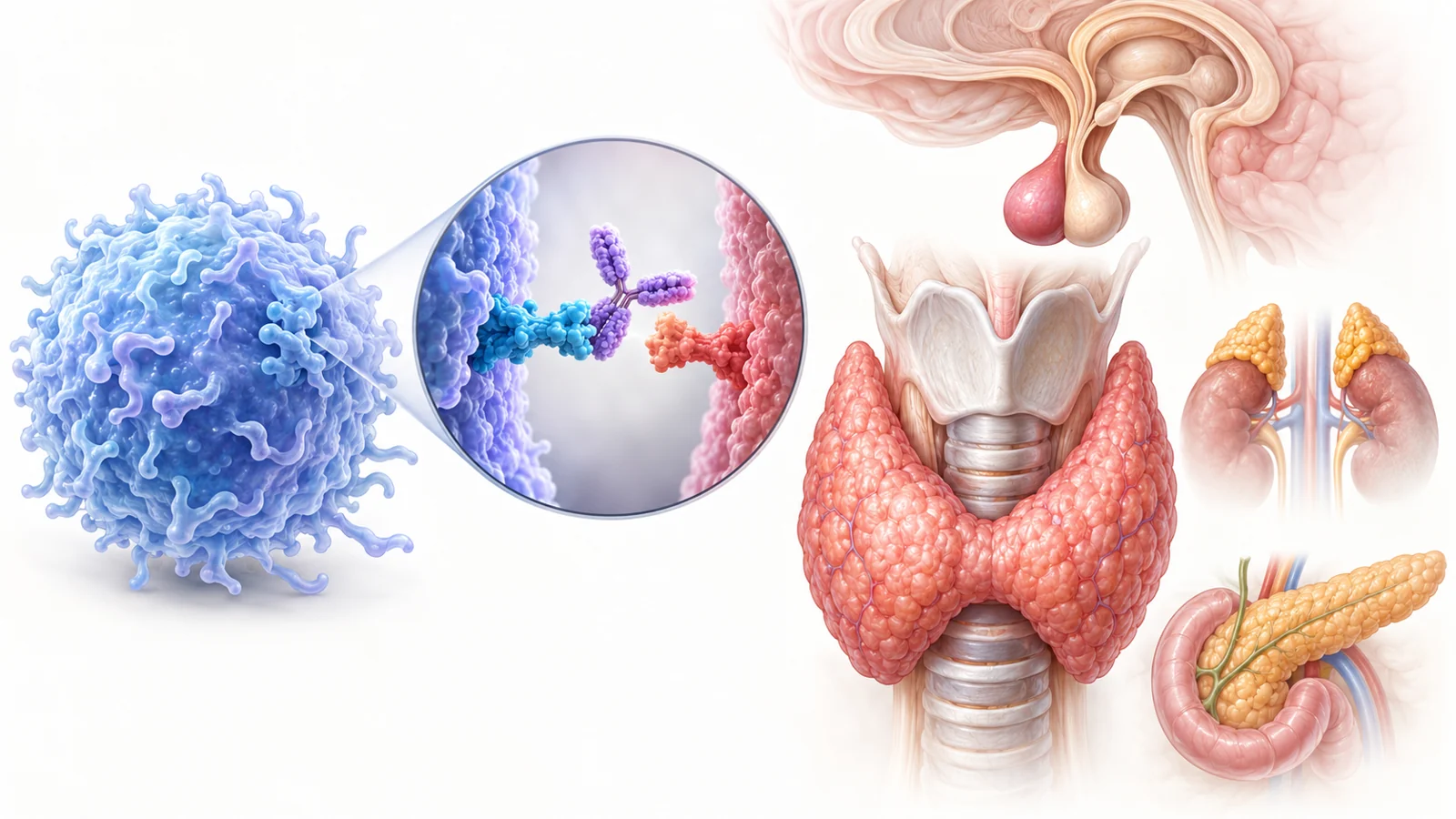
A 2021 clinical review estimates that endocrine effects occur in around 10% of patients treated with checkpoint inhibitors. Thyroid disease and hypophysitis, or inflammation of the pituitary gland, are the most commonly encountered problems. The review also describes effects involving the pancreas and adrenal glands. These are approximate figures for groups of patients, not a way to estimate one person’s risk or explain an individual’s fatigue.
Checkpoint drugs release immune brakes
Checkpoint inhibitors block signals that normally reduce T-cell activity. T cells are immune cells that help recognize and attack cancer. By blocking inhibitory signals centered on CTLA-4 or PD-1 and its partner PD-L1, these drugs can help T cells stay active against tumors. That greater immune activity can also inflame healthy tissue.
The review discusses several possible reasons endocrine tissue may be vulnerable. The review notes CTLA-4 in pituitary tissue and suggests that disrupted PD-1/PD-L1 signaling may affect how the immune system avoids attacking healthy tissue. Endocrine glands are also small and do not readily regenerate, so damage may have substantial effects on hormone production. These are proposed explanations, not established causes for every gland complication.
Thyroid and pituitary effects follow different patterns
Thyroid disease is the most commonly reported endocrine effect. The review gives approximate rates of 8% for primary hypothyroidism, when the thyroid makes too little hormone, and 3% for primary hyperthyroidism, when it makes too much. Thyroid abnormalities are more often associated with PD-1 inhibitors and typically appear four to ten weeks after treatment begins.
Hypophysitis is inflammation of the pituitary gland or its stalk. It is most commonly associated with CTLA-4 inhibitors. The review reports an incidence of about 1.3% overall, about 3% with CTLA-4 inhibitors, and 6% with combination therapy. These figures describe different treatment groups; they should not be added to the estimate for all endocrine effects.
Hypophysitis often appears around eight to ten weeks after treatment starts. It is less common after the first three months, though the review notes that it can appear many months later. Because the pituitary sends signals to other glands, inflammation can reduce those signals and lead to too little cortisol from the adrenal glands, too little thyroid hormone, and reduced reproductive hormones. Multiple deficiencies are common in the cases described.
Symptoms can include headache, nausea, dizziness and abdominal pain. In reports discussed by the review, 60% of patients with hypophysitis had a headache at presentation, while 72% had symptoms associated with too little cortisol because the pituitary was not signaling the adrenal glands adequately. Fatigue can occur with that deficiency, but it still cannot distinguish pituitary inflammation from cancer or other treatment effects on its own.
Other glands broaden the picture
The review also reports diabetes mellitus associated with pancreatic effects and primary adrenal insufficiency, which involves the adrenal glands themselves. Parathyroid complications appear much rarer: the authors describe five reported cases of hypoparathyroidism. These conditions have different reported patterns and should not be treated as equally frequent or as one uniform endocrine effect.
Monitoring is clearer for some glands than others
Regular thyroid-function and blood-glucose monitoring is broadly recommended in the guidance discussed by the review. Screening for adrenal or pituitary disease is less settled, even though missed cortisol deficiency can have serious consequences. The review describes debate over screening and reports that national UK guidance for endocrine screening was not available at the time.
Testing can also be harder to interpret during corticosteroid treatment, use of antiemetics, or severe illness. The review summarizes existing guidance and concerns; it does not test a new screening program or establish that a particular monitoring schedule prevents endocrine emergencies.
In adrenal insufficiency, a pause may be temporary
For primary adrenal insufficiency, the review describes prompt replacement of missing adrenal hormones: a glucocorticoid to replace cortisol, and a mineralocorticoid when needed. In acute or life-threatening illness, the guidance it discusses allows higher initial glucocorticoid doses, followed by a taper as the patient recovers and referral to an endocrine specialist.
Checkpoint treatment may be held while the patient is unwell. The review describes the possibility of continuing it later, once the person is stable on hormone replacement. This example concerns adrenal insufficiency; it does not mean every endocrine complication allows treatment to continue.
What timely hormone care could mean for cancer treatment
When the right hormone complication is identified and managed, timely care could reduce preventable harm and help some patients remain eligible for effective checkpoint therapy. In the adrenal example, that may mean a temporary treatment hold while hormone levels and illness are addressed, followed by a chance to resume therapy when stable. The review does not test a comprehensive screening-and-treatment pathway, so this broader benefit remains a possibility rather than a demonstrated outcome.
Key Sources
- Primary source: Endocrine complications of immunotherapies: a review.
DOI or Journal Page · Review or Meta-Analysis · 2021-03-01