
Research Signal – Source date 2021-03-01
A serious risk met a serious treatment dilemma
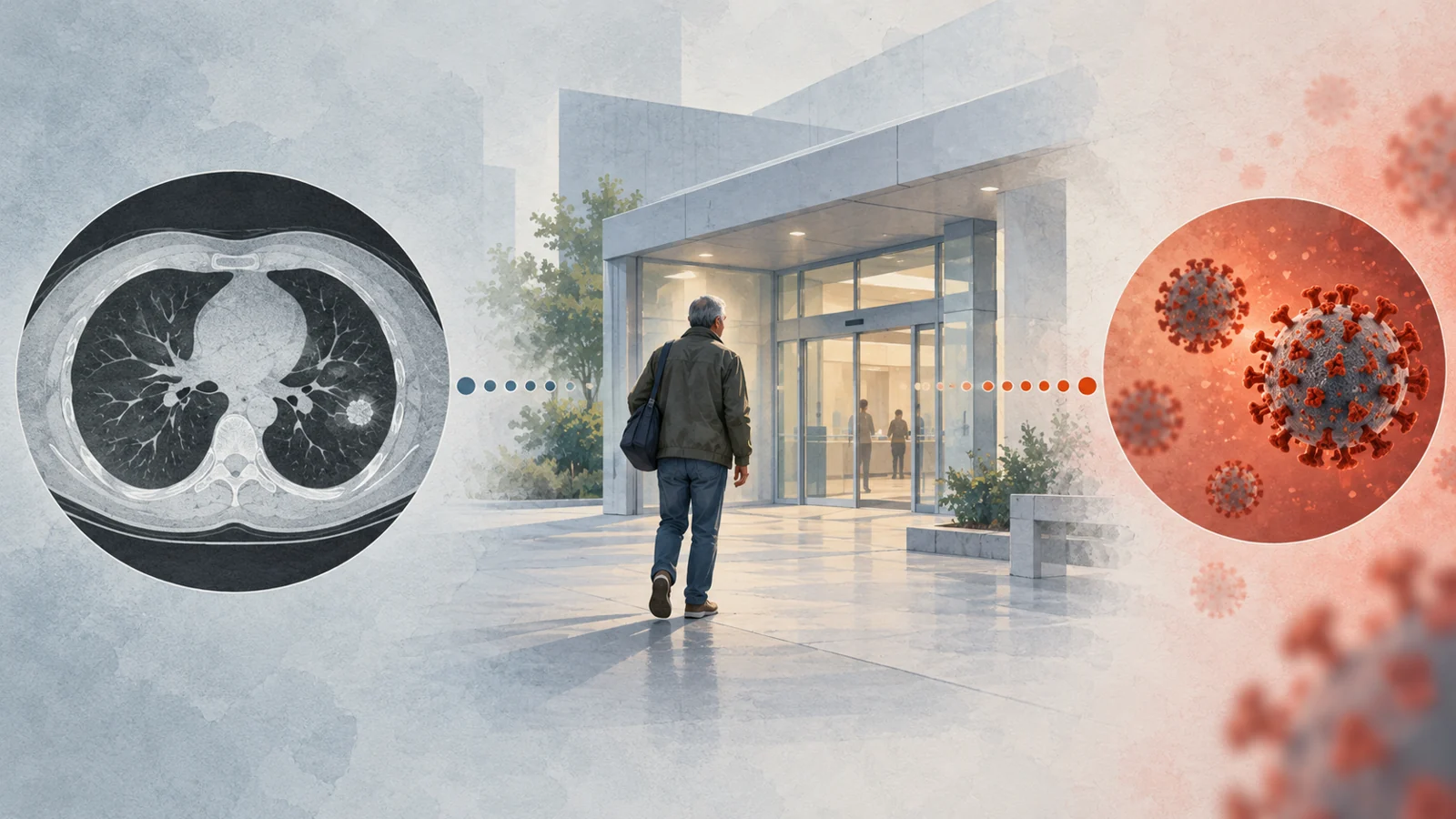
For people with lung cancer, the early COVID-19 pandemic brought two urgent concerns into the same clinic visit. Infection could lead to severe illness, yet delaying cancer treatment could also allow a dangerous disease to progress. A March 2021 review, drawing on registries and clinical reports gathered during the first year of the pandemic, described how clinicians tried to weigh those risks with incomplete and sometimes conflicting evidence.
One large US registry comparison made the danger visible. In the COVID-19 and Cancer Consortium (CCC19) cohort cited by the review, 61 of 237 people with lung cancer and COVID-19 died, about 26%. Across the full cancer cohort, 433 of 2,749 died, about 16%. The lung-cancer proportion was higher, but the overall group included people with lung cancer, so these figures are not a direct comparison with a cancer-free population. They also describe outcomes in a particular registry and period, not an individual’s expected risk.
Another large study, the UK Coronavirus Cancer Monitoring Project, reached a more qualified conclusion. Its adjusted analysis did not find a statistically significant difference in case fatality between people with lung cancer and the rest of its cancer cohort. The estimate was compatible with more than one interpretation: its confidence interval included both no difference and a potentially meaningful increase. Cohort size, patient mix, study design and care practices can all affect what a registry comparison shows.
The two findings do not cancel each other out. Together, they show why clinicians took the risk seriously while remaining cautious about treating any single percentage as a universal measure. They also leave the central practical question intact: how could people get cancer care while reducing infection exposure?
Several vulnerabilities could converge in the lungs
The review described a plausible combination of risks rather than one explanation for the registry patterns. Many people with lung cancer are older and have a history of smoking, respiratory illness or cardiovascular disease. These factors can leave less reserve when an infection affects breathing.
The cancer and its treatment history can add further strain. A tumor may obstruct an airway; surgery or radiation may alter lung tissue. The review also discussed changes in the lung’s immune environment and injury to the air sacs and blood vessels. Researchers proposed that inflammation and clotting in damaged lung tissue could contribute to severe injury, including acute respiratory distress syndrome, a life-threatening condition in which the lungs struggle to deliver oxygen.
These mechanisms help explain why severe respiratory illness was a concern. They do not show that any one factor caused the higher death proportion in CCC19, or that every person with lung cancer faced the same vulnerability. The observed outcomes came from people with different cancers, health conditions and treatment histories.
Treatment comparisons raised questions, not a safety ranking
Immune checkpoint inhibitors—drugs that help the immune system recognize cancer—initially worried clinicians. Because these medicines can activate immune responses, one concern was that they might intensify the inflammation associated with severe COVID-19. Pneumonitis, or inflammation in lung tissue, was another concern because it can occur with cancer treatment as well as with infection.
The observational reports summarized in the review did not show worse COVID-19 outcomes for people receiving immune checkpoint inhibitor treatment alone. A report on 69 people with lung cancer found that prior exposure to a PD-1 checkpoint inhibitor was not associated with greater illness severity. Other registry analyses described outcomes as equivalent to or better than those among people receiving other treatments. These findings eased one specific concern, but they did not prove that immunotherapy was safer for every patient or situation.
Chemotherapy results were harder to interpret. An early analysis in the thoracic-cancer TERAVOLT registry linked chemotherapy alone with higher risk of death. A later, larger analysis also found worse outcomes for people receiving chemotherapy alone or no treatment than for some other treatment groups. Yet a single-center series reported no effect of recent systemic treatment on COVID-19 outcomes. Broader registry comparisons mixed many cancer types and therapies, and the patients who received different treatments were not interchangeable. Their health and cancer circumstances could help explain the patterns.
Targeted therapies, including drugs called tyrosine kinase inhibitors, appeared more favorable in some reports. In an early TERAVOLT analysis, people taking these drugs were less likely to be hospitalized; expanded analyses did not find an increased risk of death after adjustment. The review noted that patients receiving targeted therapies may differ in age, smoking history and other ways, making it difficult to separate a drug effect from the characteristics of the people who use it. Across all three treatment groups, the evidence described associations, not a dependable ordering of which treatment was safest.
Fewer visits could change the calendar without abandoning care
Avoiding exposure sometimes meant changing how treatment was delivered. The review described longer intervals between some immunotherapy doses, which could reduce trips to a clinic while maintaining the intended treatment schedule. It also described hypofractionated radiation schedules: delivering radiation in fewer visits. These were ways to reduce the number of healthcare encounters, not evidence that less cancer treatment was better.
At the same time, some operations and systemic treatments were delayed or canceled early in the pandemic, when testing supplies, protective equipment and hospital capacity were strained. In TERAVOLT, the average reported treatment delay was 21 days. The review said the effect of such delays on cancer outcomes remained to be seen. Infection exposure mattered, but so did the potential cost of postponing care for a cancer with substantial risk of mortality. The balance depended on the cancer and the circumstances of the patient and healthcare system.
Lung changes could have more than one cause
A new cough, shortness of breath or abnormal lung scan could be difficult to interpret in a person with lung cancer. COVID-19 can inflame lung tissue, but so can radiation and some cancer drugs. A tumor can also grow or obstruct an airway. The symptoms and scan appearances may overlap, and imaging alone may not distinguish the cause.
That overlap made infection testing and clinical assessment important when symptoms or scans raised concern. It also complicated decisions about whether to continue a treatment associated with lung inflammation. The same finding could point to different problems, each requiring a different response.
Disrupted research slowed the search for answers
The pandemic affected more than clinic schedules. The review described reduced enrollment in cancer trials, paused studies and interruptions to laboratory and specimen work. Hospital pressures postponed procedures that would have supplied tissue for research. Some biobanks received and distributed fewer samples, while staffing and laboratory shutdowns interrupted ongoing work.
These disruptions mattered because researchers needed patient data and specimens to understand how infection, cancer and treatment interacted. Remote follow-up and electronic consent helped some studies continue with less in-person contact. Regulators also issued guidance for adapting trial procedures. Those adjustments offered ways to keep research moving, though they could not remove every operational barrier.
Keeping lung cancer care moving during COVID-19
If clinics could reduce avoidable visits while preserving needed treatment, and researchers could keep collecting reliable data, people with lung cancer could face fewer interruptions in both care and the work needed to improve it. The review showed why that capability mattered: severe infection was a real concern, but decisions made under emergency conditions could also affect cancer treatment and the evidence available to guide it. Whether particular adjustments achieved that balance was not established by the early reports.
Key Sources
- Primary source: Severity of COVID-19 in patients with lung cancer: evidence and challenges.
DOI or Journal Page · Review or Meta-Analysis · 2021-03-01
Keep exploring