
Research Signal – Source date 2021-02-26
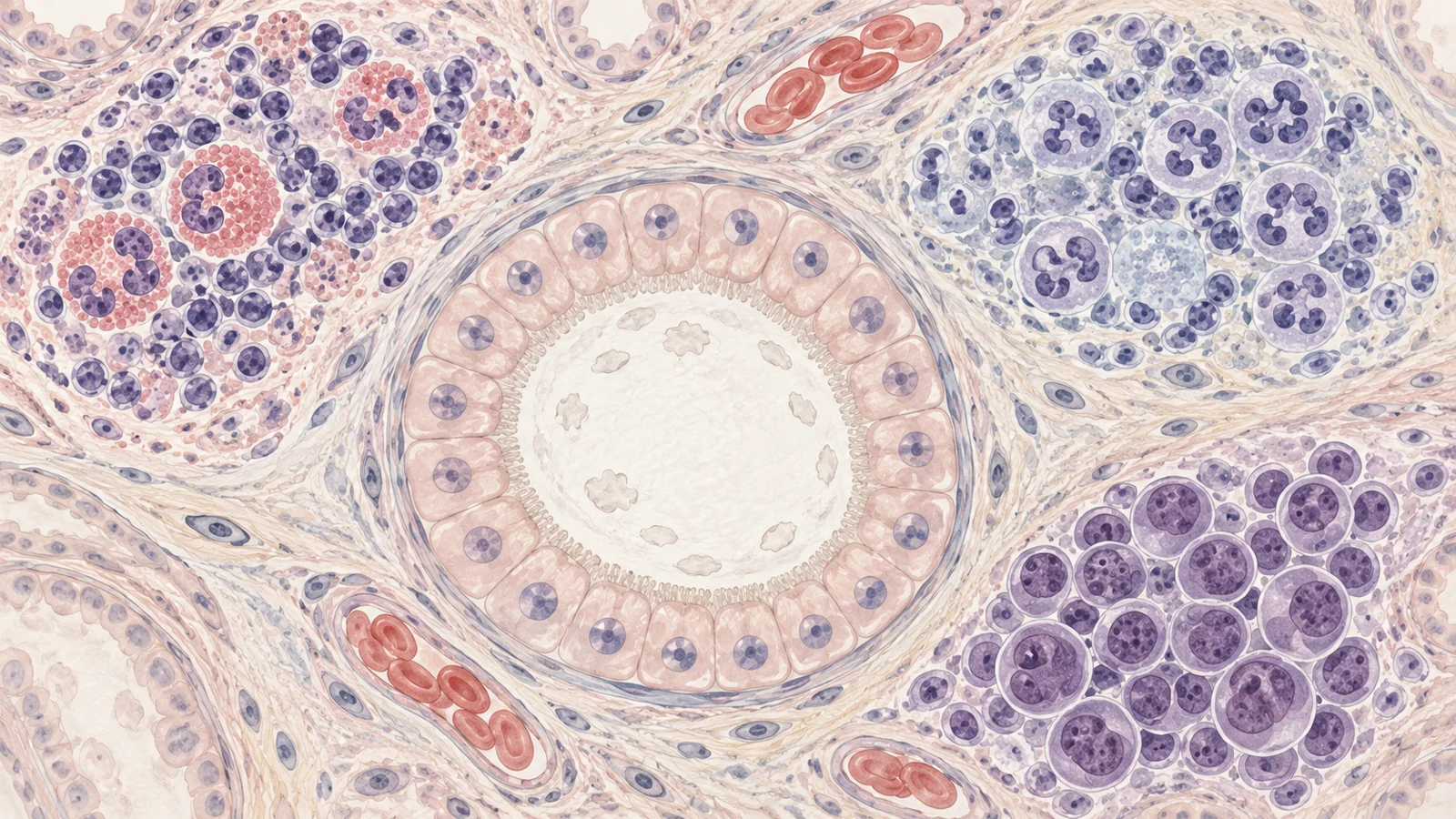
When kidney function worsens during cancer care, the injury may come from the cancer, its treatment, or an infection that takes hold more easily during illness or immune suppression. One possible cause is acute tubulointerstitial nephritis, or ATIN: inflammation in the kidney tissue around its tubules, the small channels that process urine. The inflammation often involves immune cells, especially T cells.
A 2021 review of ATIN in oncology describes why identifying the cause can be difficult. Several conditions can produce kidney injury, and some can look similar in a tissue sample. Yet the distinction can matter: inflammation linked to a medicine, an infection, and cancer cells in the kidney may call for very different responses.
A bladder-cancer treatment can raise a difficult distinction
Bacillus Calmette–Guérin, or BCG, is an attenuated form of Mycobacterium bovis given into the bladder to treat noninvasive bladder cancer. The treatment is intended to stimulate a local immune response against cancer cells. The review describes acute kidney injury during BCG treatment as most often attributed to ATIN in a cited review of kidney toxicities.
But the same treatment also creates a diagnostic puzzle. BCG-related ATIN and infection of the kidney by mycobacteria can share tissue features, particularly when granulomas—organized clusters of inflammatory cells—are present. Tests for mycobacterial DNA in kidney tissue can help distinguish infection from inflammation without infection. Systemic symptoms also warrant caution because BCG can occasionally cause infection, especially in people with weakened immune defenses.
The difference has direct consequences in the cases described: the review contrasts corticosteroids for ATIN with tuberculosis treatment for infection. Confusing the two could therefore lead clinicians toward treatment for the wrong underlying problem.
Cancer immunotherapy can loosen immune restraint
Immune checkpoint inhibitors help T cells attack cancer by blocking signals that normally restrain their activity. Those signals also help the immune system tolerate the body’s own tissues. When the restraint is lifted, immune-related side effects can occur; the kidney reaction most often reported in the review is ATIN, although other kidney diseases have also been described.
A medicine taken alongside immunotherapy may complicate the picture. The review discusses a reported case in which a patient developed ATIN during nivolumab treatment and showed lymphocyte reactivity to esomeprazole, an acid-suppressing drug the patient had previously tolerated. It also describes an association between checkpoint inhibitors and higher ATIN risk among patients taking proton pump inhibitors, a class of acid-suppressing medicines. These observations raise the possibility that immunotherapy can change how the immune system responds to another drug. They do not, by themselves, identify the cause in any one patient.
In a reported series of 13 people who developed acute kidney injury during checkpoint-inhibitor treatment and underwent kidney biopsy, 12 had ATIN and one had a different diagnosis, thrombotic microangiopathy. That is a finding among a small group selected for kidney injury and biopsy, not an estimate of how often ATIN occurs among everyone receiving these medicines.
The review also reports that, among patients whose ATIN had been treated and recovered, 23% experienced a flare after checkpoint-inhibitor treatment was restarted. This figure concerns that particular rechallenged group; it does not describe the risk for all checkpoint-inhibitor users. The same review’s clinical comparison found milder creatinine elevations but more prominent white blood cells in urine in checkpoint-inhibitor-associated ATIN than in ATIN linked to other drugs. These are group-level observations, not a stand-alone diagnostic test.
Different cancer drugs can injure the kidney in different ways
The review’s examples show why a drug’s known kidney effects do not settle the cause of an individual patient’s injury. Platinum medicines such as cisplatin and carboplatin are more commonly associated with damage to kidney tubule cells and acute tubular necrosis. Yet the review also describes cases of ATIN during treatment with oxaliplatin and carboplatin. Fever, rash, or other systemic symptoms appeared in some reported cases; persistent kidney impairment after stopping the medicine was another reason the authors say ATIN should be considered.
Tyrosine kinase inhibitors (TKIs), including sunitinib and sorafenib, block signals involved in cell growth. Some of those signals also play a role in repair processes in kidney tubules. The review describes ATIN cases associated with these medicines, including one patient whose condition improved after sunitinib was withdrawn and flared after treatment with the related drug sorafenib. That pattern suggests a possible class effect, but a reported case cannot prove that a drug caused every similar episode. With TKIs, the review also notes that thrombotic microangiopathy is another possible cause of acute kidney injury.
Drug-related ATIN is one part of a broader kidney-injury picture. The review’s examples illustrate why a familiar medicine-related pattern can be a starting point for investigation, not a substitute for finding what is happening in the kidney.
Infection can leave clues in kidney tissue
Cancer and cancer treatments can weaken immune defenses, making infections more likely or more severe. Some viral infections have also been linked to ATIN, particularly in people with blood cancers. Adenovirus, for example, can affect kidney tubule cells. The review describes characteristic-looking changes in those cells and notes that adenovirus DNA can be detected in kidney tissue by polymerase chain reaction; viral particles may also be seen with electron microscopy.
These tissue findings can add evidence for infection as the cause of kidney inflammation. Their role is different from simply seeing inflamed tissue: the question is whether the cells and tests point to a particular infectious agent.
Blood-cancer cells can resemble inflammation under the microscope
A blood cancer can infiltrate the kidney and cause or mimic acute kidney injury. Under an ordinary light microscope, malignant cells and the inflammatory cells of ATIN may look similar. The review explains that immunohistochemistry—tests that identify cell markers—can help distinguish them: cancer infiltration may consist of a more uniform group of related cells, while ATIN typically involves a more varied mix.
The two processes can also appear together. In one case discussed in the review, a kidney biopsy showed nodules of mantle cell lymphoma alongside a separate, diffuse infiltrate of T cells associated with ATIN. Other reported cases similarly contained both malignant cells and inflammatory infiltrates. A diagnosis therefore may need to account for more than one process in the same kidney.
How a clearer kidney diagnosis could protect cancer care
More reliable identification of medicine-related inflammation, infection, or cancer infiltration could help kidney and oncology teams choose care that fits the cause while preserving cancer-treatment options that remain viable. That benefit depends on diagnostic distinctions and responses holding up in clinical use; the review itself does not show that a particular diagnostic approach improves kidney or cancer outcomes. Its authors also mention preliminary urinary inflammatory-marker observations, but describe those data as unpublished, so they do not establish a validated test.
Key Sources
- Primary source: Acute Tubulointerstitial Nephritis in Clinical Oncology: A Comprehensive Review.
DOI or Journal Page · Review or Meta-Analysis · 2021-02-26
Keep exploring