
Research Signal – Source date 2021-02-01
Dinutuximab, an antibody treatment, became part of standard care for neuroblastoma and substantially improved patient outcomes. Yet five-year survival remains below 50% for children with high-risk disease. Those two facts frame a difficult question: why has one immune treatment made a difference while other approaches still face obstacles inside these tumours?
A 2021 review of neuroblastoma’s immune environment describes several possible barriers. Its account brings together reported treatment progress, observations about immune cells and tumour biology, and proposed strategies. It does not quantify dinutuximab’s effect or explain the cause of the survival gap. The distinction matters: a treatment can help without resolving the broader challenge of making a tumour consistently visible and vulnerable to immune attack.
A familiar strategy meets a different tumour
Checkpoint-blocking drugs, antibody-based treatments and therapies that give patients T cells have produced notable successes in some adult cancers. These approaches try to help immune cells recognize cancer, release restraints on their activity, or target tumour cells more directly. Their record in adults, however, cannot by itself predict how they will perform in a childhood cancer with a different immune environment.
In neuroblastoma, the review points to low mutational load and a lack of MHC-I expression as obstacles to recognition. Mutational load describes how many genetic changes a tumour has accumulated. When that load is low, there may be fewer unusual tumour features for the immune system to detect. MHC-I molecules normally display fragments from inside a cell on its surface, giving immune cells a way to inspect what is happening there. With little or no MHC-I expression, that route for recognizing tumour cells can be limited.
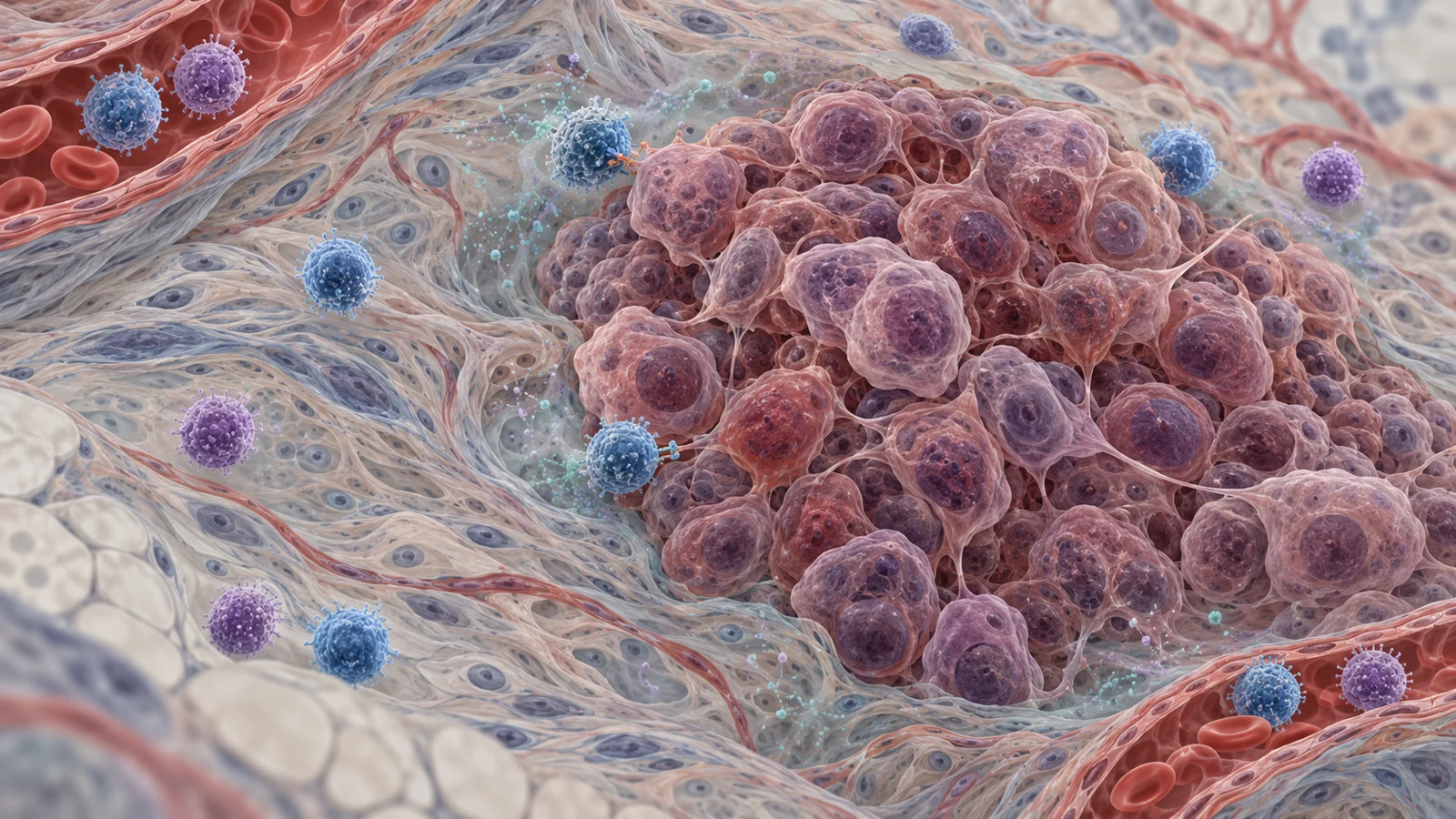
Recognition is only part of the problem. Neuroblastoma tumours can also express immune checkpoint molecules, encourage the presence of suppressive myeloid and stromal cells, and release immune-regulating substances. These features can dampen immune activity or make it harder for immune cells to enter and act in the tumour. The review describes a setting in which an immune attack may have trouble getting started and may meet local resistance even when immune cells are present.
Immune cells must be present and able to react
The number of T cells or natural killer (NK) cells found in a tumour tells only part of the story. Their presence shows that immune cells have reached the tumour; it does not establish that they can recognize and attack its cancer cells. The review reports that only a small fraction of tumour-infiltrating lymphocytes—immune cells found within tumour tissue—show tumour reactivity.
That gap helps explain why cell counts alone do not describe the strength of an immune response. A tumour could contain immune cells that are too few to mount a substantial attack, cells that cannot recognize the tumour, or cells whose activity is suppressed by the surrounding environment. The review identifies limited T- and NK-cell infiltration as especially pronounced in high-risk neuroblastoma and reports that infiltration is associated with survival. This is a prognostic association: it does not show that increasing infiltration would, by itself, improve survival.
Several obstacles may call for more than one approach
The review discusses combining immunotherapies and tailoring strategies to individual patients as possible ways to address multiple barriers. In principle, a treatment approach could need to support immune recognition while also helping immune cells reach the tumour and remain active there. A strategy suited to one tumour’s immune features might not fit another’s.
These are directions proposed by the review, not demonstrated benefits of particular combinations or personalized treatments. The supplied account does not give trial-by-trial estimates or establish that a proposed strategy improves outcomes for children with neuroblastoma. The central treatment challenge is to turn an immune presence into a focused, sustained response against the tumour.
What the review can tell us
The article published on February 1, 2021, is a review that synthesizes reported observations and treatment developments in neuroblastoma immunology. Its account supports separate conclusions of different kinds: dinutuximab had entered standard care and was reported to improve outcomes; immune-cell infiltration was associated with survival; and features of the tumour and its surroundings may impede immune recognition and activity. The review also presents combination and personalized approaches as possibilities.
These claims should not be collapsed into one. The reported treatment benefit does not establish how large dinutuximab’s effect was from the supplied information, while the survival association does not establish that infiltration causes better outcomes. Proposed strategies remain proposals in this evidence account. Keeping those distinctions clear leaves room to recognize progress without mistaking a promising treatment idea for proven benefit.
What stronger immune responses could mean for children with neuroblastoma
For children with high-risk neuroblastoma, stronger and more precisely directed immune responses could eventually broaden treatment choices beyond the existing antibody approach. That possibility depends on proposed strategies overcoming barriers to recognition, entry and tumour reactivity, and then demonstrating benefit for patients. If they do, immunotherapy could become more effective for children whose disease remains difficult to treat.
Key Sources
- Primary source: The immune landscape of neuroblastoma: Challenges and opportunities for novel therapeutic strategies in pediatric oncology.
DOI or Journal Page · Review or Meta-Analysis · 2021-02-01
Keep exploring